I grew up on the hem of Alabama’s Black Belt, where streets steam in the sun and Greek Revival buildings hold their posture even when their paint peels. I guiltlessly walked barefoot and rode my bike through tall grass fields in the warm rain. These foundational experiences taught me that dignity can endure even when resources do not.
Design, for me, was never theoretical. It was always something I could reach out and touch. Something already there, asking to be cared for.
My father was an architect and professor leading with action, humility, and humor. My mother, a history teacher turned librarian, believing in stories as stewardship. From them I learned that leadership is both practical and moral: we build what we believe — and what we build, in turn, builds us.
At Auburn’s Rural Studio, I studied under the late Samuel Mockbee, and came to understand architecture not as spectacle but as service — a way of making space for comfort, belonging, and hope. Rural Studio taught me to begin with what exists: to see materials, communities, and histories as assets rather than deficits.
That belief followed me to New York and San Francisco, where I spent a decade with Rafael Viñoly Architects. I stood on construction sites and led complex coordination efforts. I learned how buildings are shaped as much by governance, policy, and culture as by line weight and light.
Later, at the Harvard Graduate School of Design, I studied cities — their infrastructures and exclusions. I became increasingly interested in the invisible architecture: the systems that determine the scale of development, who gains access to choice, and what cultures get to belong.
Today, as Dean of Practice at the Boston Architectural College, I design pathways.
Between education and practice.
Between ambition and access.
Between what the profession has been and what it could become.
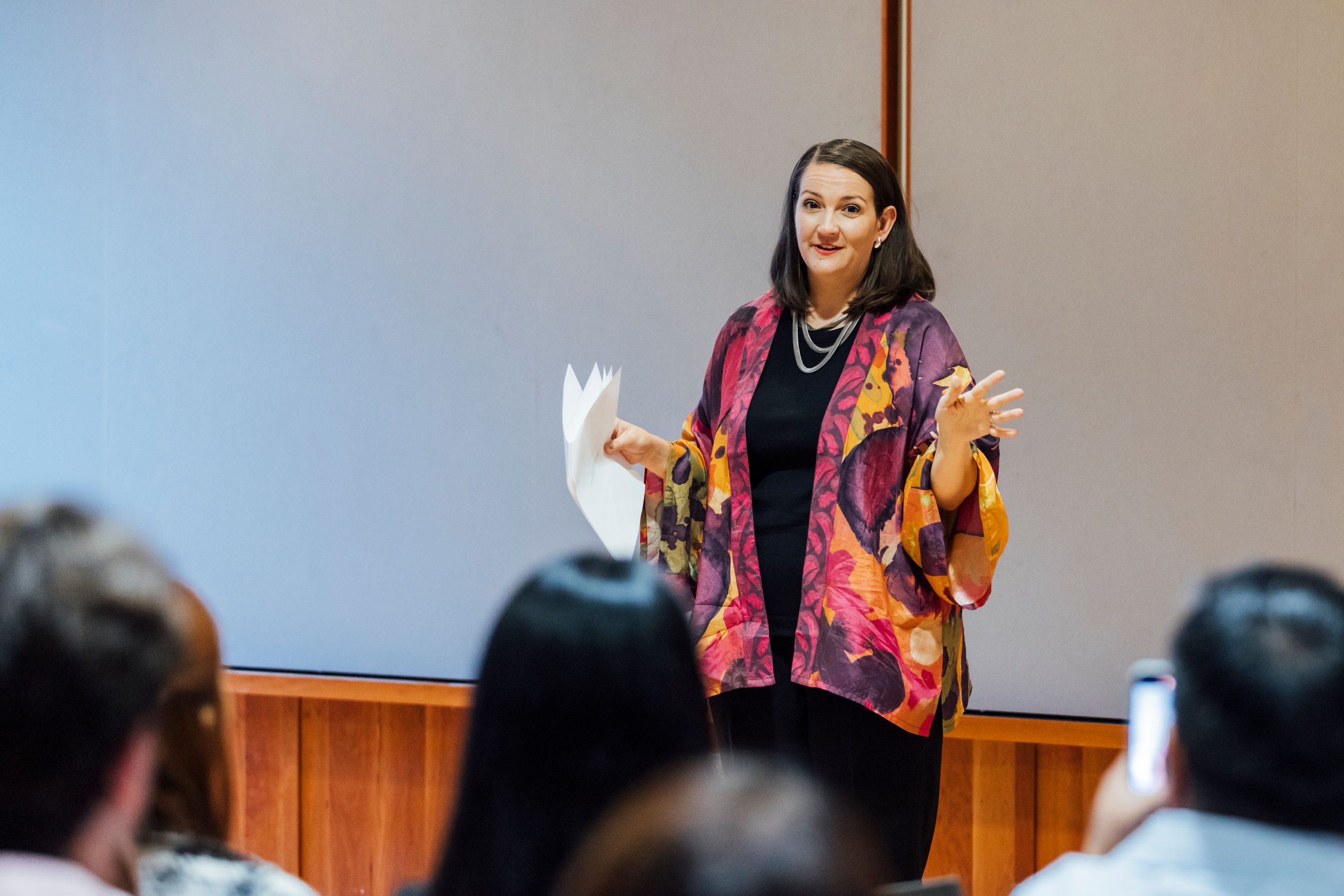
My work centers on circularity — in materials, in institutions, in opportunity. Through initiatives that foreground material reuse and workforce development, I ask how we might build without extraction — how we might value what already exists before reaching for something new. Reuse, to me, is not only about lumber and brick. It is about people: talent overlooked, pathways interrupted, knowledge undervalued.
I work with students whose lives do not fit the traditional mold — those who work full time, care for families, or return after nonlinear journeys. I believe architecture must expand to meet the fullness of human life, not require people to shrink in order to succeed.
I design systems that ask better questions.
I convene partnerships that widen doors.
I help institutions measure what matters.
Because architects do more than design buildings. We design processes. We design culture. We design the conditions under which others can flourish.
“Later” is a comfortable word in institutions. Later we will widen access. Later we will redefine excellence.
But later is now.
The profession we hope for will not arrive by inertia. It must be built — courageously and collectively.
My life’s work is redesigning the systems of architecture so that what already exists — in people, in places, in materials — is recognized, valued, and given the chance to endure.
—BLG
 Bethany I. Lundell Garver